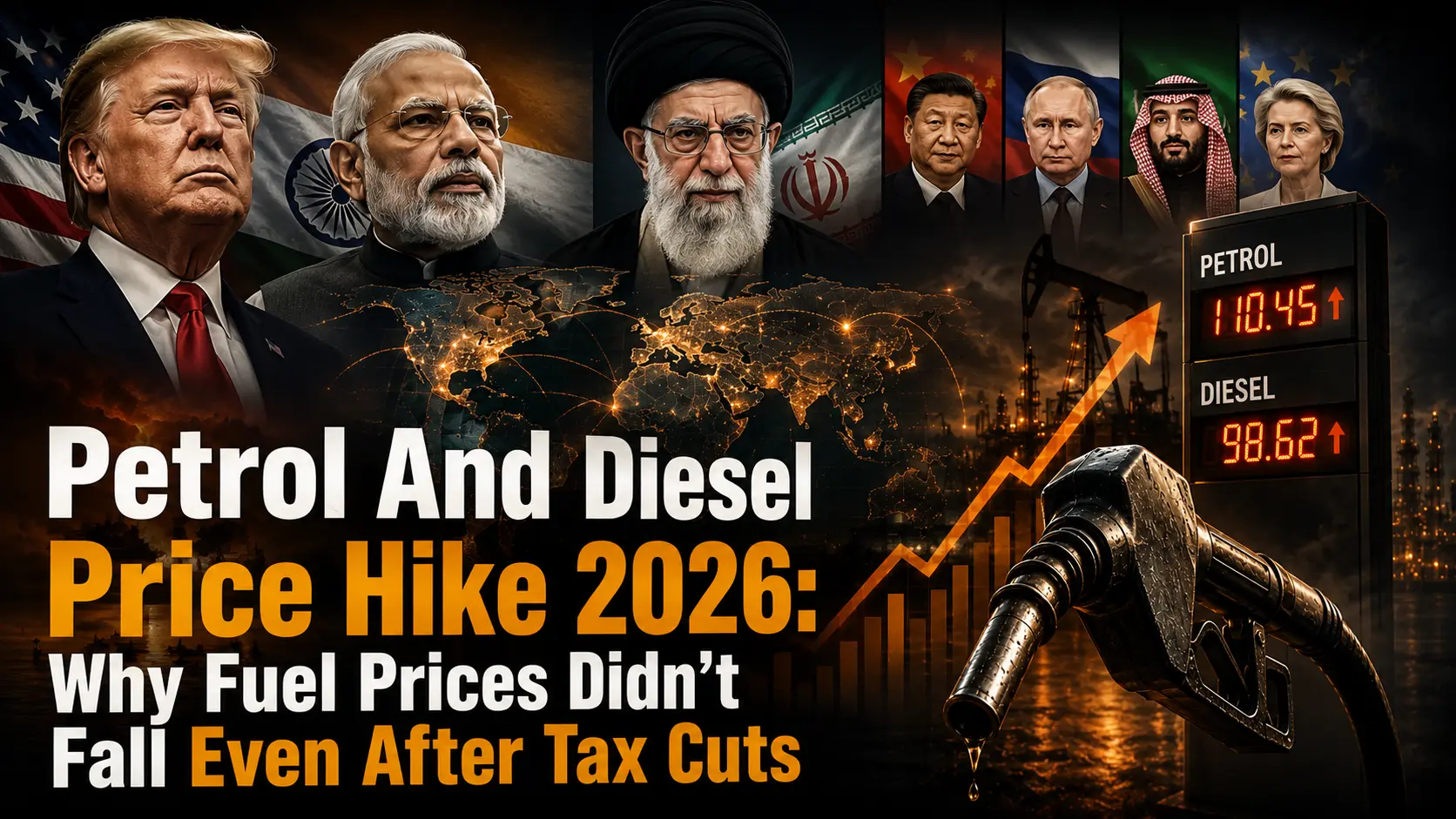
Petrol and Diesel Price Hike: The government cut fuel taxes by ₹10 per liter, yet petrol and diesel prices barely moved, and that confused millions of Indians. Normally, fuel prices should have fallen immediately. But they didn’t. Suddenly, one question spread across the country: if fuel taxes were reduced, why was petrol still so expensive? During his latest energy and economic stability speech, PM Narendra Modi made one thing clear—India was not just fighting high fuel prices but also a global energy crisis. Rising crude oil prices, West Asia tensions, disrupted supply chains, inflation pressure, and the Strait of Hormuz risk created massive pressure on India’s fuel economy. That’s why the 2026 petrol and diesel price hike was never only about taxes. The fuel prices could have been much higher but for the government’s intervention. The government’s slashing of the excise duty by ₹10 per litre was a protective shield, insulating Indian consumers from the global oil crisis.
Suddenly, the entire narrative surrounding fuel prices shifted. It was no longer just a story about fuel prices, it was a conversation about geopolitics, energy security, controlling inflation, India’s dependence on imported oil.
The ₹10 Fuel Tax Cut That Consumers Never Felt
On 27 March 2026, the Centre reduced central excise duty by ₹10 per litre on petrol and diesel.
Petrol’s Special Additional Excise Duty (SAED) was reduced from ₹13/L to ₹3/L.
Diesel duty was cut nearly to zero.
But here’s the twist most headlines missed:
The benefit never directly reached consumers.
Instead of reducing pump prices, the government used the tax reduction to protect state-run oil marketing companies like IOC, BPCL, and HPCL from massive crude oil losses.
So while fuel taxes technically fell…
Petrol prices remained almost unchanged.
Delhi petrol still hovered around ₹94–95 per litre even after the excise duty reduction.
This wasn’t a normal tax cut.
It was an emergency economic stabilization strategy.
Table of Contents
The Invisible Fuel Crisis India Was Trying To Avoid
Petrol And Diesel Price Hike: The global oil crisis of 2026 has transformed everything on its head.
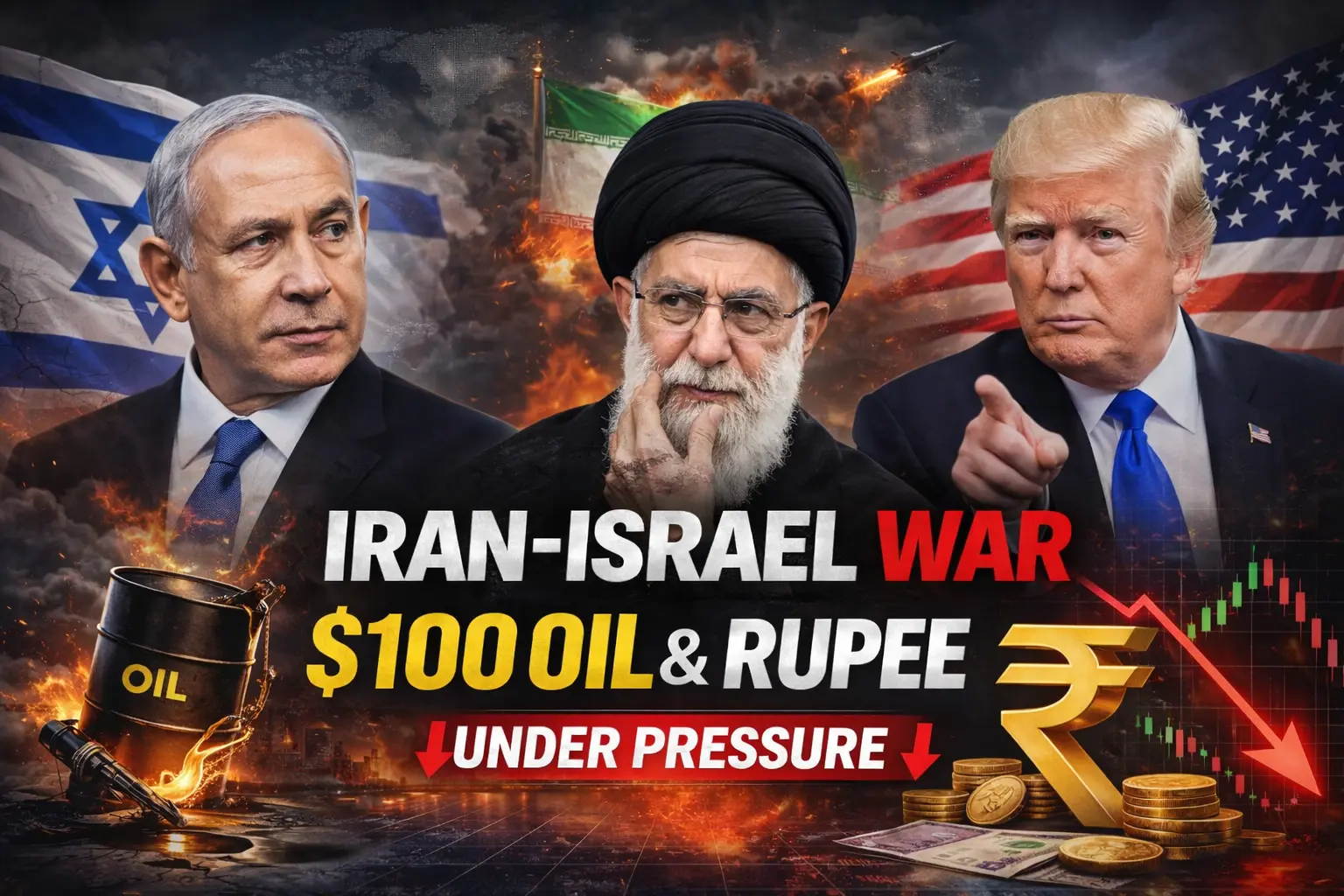
The Strait of Hormuz—one of the world’s most critical oil routes—faced severe disruption.
Tanker movement collapsed.
Insurance premiums exploded.
Global crude prices surged.
For India, this was extremely dangerous.
Because India imports nearly 88% of its crude oil requirements.
If the government had allowed global prices to directly hit consumers, petrol and diesel prices in India could have jumped 30–50%.
That would have triggered the following:
- Food inflation
- Expensive transportation
- Higher logistics costs
- Pressure on industries
- Massive middle-class frustration
So instead of allowing a visible petrol and diesel price hike, the government froze retail prices and shifted the financial burden elsewhere.
Oil Companies Started Bleeding Thousands Of Crores
Indian oil marketing companies were losing ₹1,000 crore to ₹1,700 crore every day, it was reported in May 2026.
Industry estimates indicated:
- Diesel losses were about ₹50 a liter.
- Rs 20 liter petrol losses crossWithin weeks, total under-recoveries crossed over Rs 1 lakh crore.
- That’s why the tax cut was a big deal.
- Not because they brought down gas prices.
But it saved oil companies from going under with the pressure of world crude. India had used tax revenue to cushion the shock effectively.
Why Petrol Prices Still Differ Across India
State VAT remained untouched even after the center cut excise duty.
And that’s why fuel prices are wildly different across India.
May 2026:
- Andhra Pradesh petrol is over ₹109/L.
- Mumbai stayed above ₹103/L.
- Delhi around ₹94/L.
- Port Blair was around ₹82/L.
- It is also about state taxation.
Why?
Fuel still remains outside GST.
So each state has its own VAT structure.
This means that the real fuel war in India is no longer only about crude oil.
The Bigger Shift Has Already Started
Petrol and diesel price hike: The 2026 petroleum oil crisis could actually accelerate India’s long-term energy revolution faster than anticipated.
Three big changes are already apparent:
1. E20 Ethanol-Blended Fuel Expansion
India has contributed to making E20 petrol mandatory across the country to reduce its reliance on oil.
2. EV Economics Will Be No Longer Ignorable
The report contains a comparison of estimates:
Running cost of petrol car: ₹6.32/km approx.
an electric vehicle running cost: ~ ₹0.21/km
That gap is growing too wide for consumers to ignore.
3. Economic Tool: Hybrid Work Quietly Takes Hold
With fuel prices still high, remote and hybrid work is no longer just a lifestyle choice.
They’re turning into inflation survival tactics.
The Real Truth Behind India’s Petrol Prices
Petrol and diesel price hike: The government did lower fuel taxes.
However, India did not see cheaper petrol.
This tax reduction aimed to prevent a global oil crisis from turning into a national economic disaster.
That’s what many headlines overlooked.
In 2026, India’s fuel system no longer operates like a typical free market.
It functions as a controlled economic stabilizer—managing geopolitics, inflation, public opinion, and financial survival simultaneously.
If global crude prices stay high…
The next chapter of India’s fuel narrative might not focus on petrol at all.
It could center on how quickly India can break free from its reliance on it.
Frequently Asked Questions FAQs About Petrol and Diesel Price Hike
Did India Reduce Petrol And Diesel Taxes In 2026?
Yes. On 27 March 2026, the Centre reduced central excise duty by ₹10 per litre on petrol and diesel.
Petrol’s Special Additional Excise Duty (SAED) was reduced from ₹13/L to ₹3/L, while diesel duty was cut close to zero.
If Fuel Taxes Were Reduced, Why Didn’t Petrol Become Cheaper?
The tax cut was not given directly to consumers.
Instead, the government utilized the lowered excise duty to protect public oil companies such as IOC, BPCL, and HPCL from large losses due to soaring global crude oil prices.
That’s why pump prices have mostly remained stable.
What Caused The Petrol And Diesel Price Hike Crisis In 2026?
The biggest trigger was the conflict in West Asia and the disruption in the Strait of Hormuz, a route that carries nearly 20% of the world’s oil trade.
India faced tremendous pressure on fuel imports as global crude oil prices zoomed to $126 a barrel.
Why Are Petrol Prices Different Across Indian States?
Fuel is not yet under GST.
VAT and local fuel taxes vary from state to state leading to huge inter-state price variations between different states including Delhi, Gujarat, Maharashtra, Andhra Pradesh and others.
Could Petrol And Diesel Prices Rise Further In India?
Yes. Since global crude oil prices are high and geopolitical tensions are still present, India may need to increase retail fuel prices eventually because Oil Marketing Companies cannot handle significant losses for too long.
The Road Ahead For Petrol And Diesel Prices
The 2026 petrol and diesel price hike crisis showed that India’s fuel problem is no longer just about taxes.
Even after cutting excise duty, petrol prices didn’t fall because the government used the tax relief to protect oil companies from massive global crude oil losses.
India avoided an immediate fuel shock.
But the crisis also exposed how vulnerable the economy remains to global oil disruptions.
At the same time, rising fuel pressure is accelerating India’s shift toward E20 fuel, EV adoption, and reduced dependence on crude oil.
Because in the long run, India’s biggest solution to petrol and diesel price hikes may not be cheaper fuel.
It may be using less fuel altogether.