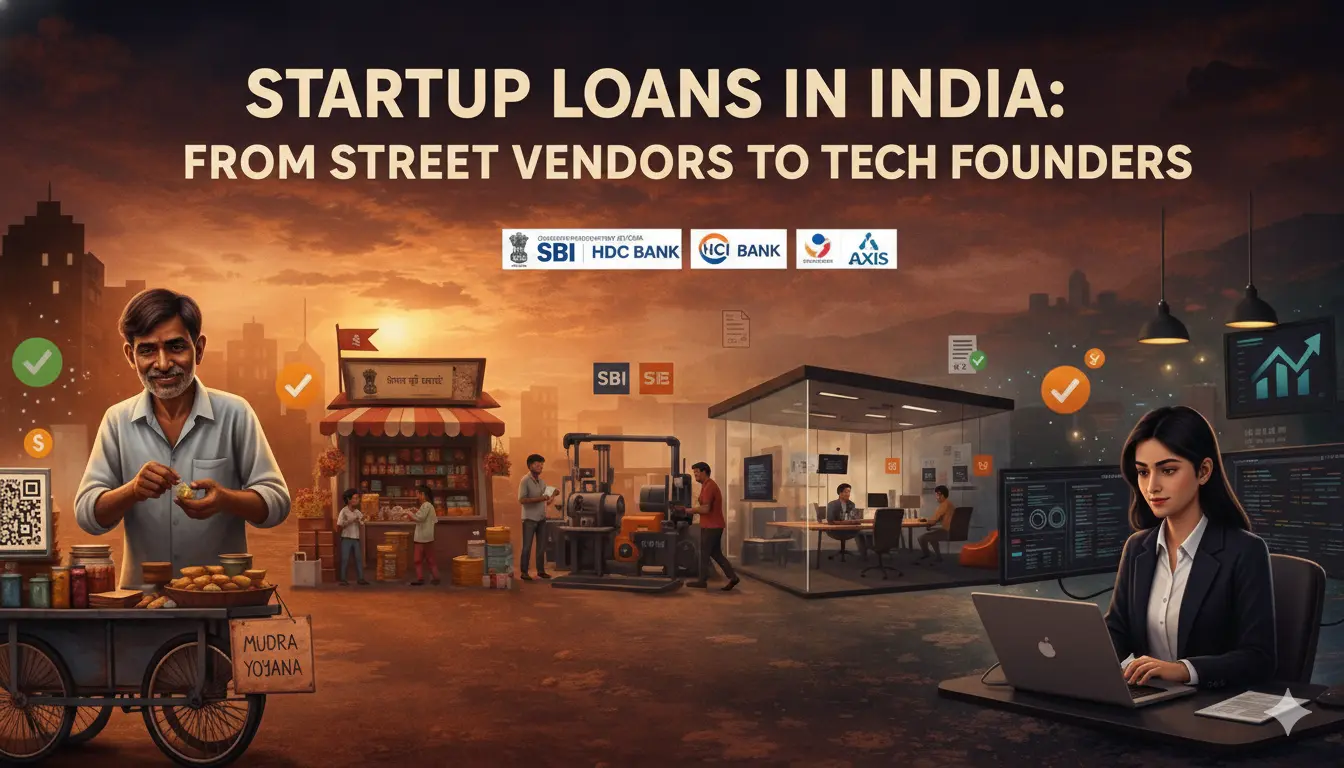
Starting a business is exciting—but getting the right startup loan is where many dreams either take off or quietly fade. In modern India, funding isn’t just about personal savings or seeking investors; there is now a strong network of government-supported programs, bank loans, and collateral-free options available for new founders, MSMEs, and innovative startups. From entrepreneurs at the idea stage with no revenue to expanding businesses ready to grow, a startup loan can be the crucial link between ambition and action—without losing ownership. This guide simplifies the complexities to show how India’s changing startup finance system operates, who is eligible, and how you can effectively access funds to make your business idea a lasting success.
What Is a Startup Loan?
A startup loan is a form of financial assistance offered by banks, NBFCs, or the Government of India to aid new and early-stage businesses in managing crucial startup expenses—like equipment, working capital, technology, marketing, and recruitment.
In contrast to equity funding, a small Business loan enables founders to secure capital without relinquishing ownership or control, which makes it a highly favored funding option for first-time entrepreneurs and MSMEs in India.
Table of Contents
Who Is Eligible for a Startup Loan?
The requirements for a small Business loan can vary depending on the lender and the specific scheme, yet most banks, NBFCs, and government programs in India operate under a shared framework. If you fulfill the basic criteria outlined below, you are already within the eligible range:
General Eligibility Criteria
- Indian citizens between the ages of 18 and 65
- Typically, businesses should be 0 to 5 years old (specific to the scheme).
- MSME (Udyam) registration is required.
- A feasible business plan or an income-generating activity is necessary.
- An acceptable CIBIL score (generally 650 or higher for bank loans; more lenient criteria under government schemes)
Applicants Who Are Preferred
- Women entrepreneurs
- Entrepreneurs from SC / ST / OBC categories
- First-time business founders
- Businesses located in rural and semi-urban areas
In summary, startup loans in India cater not only to high-growth startups but also to any sincere entrepreneur who possesses intent, discipline, and a viable business concept.
Types of Startup Loans in India
The startup loan framework in India is structured like a ladder, starting from livelihood businesses and extending to high-growth innovative startups. The choice of loan is influenced by the business’s stage, sector, credit profile, and growth aspirations.
Overall, small Business loans in India can be classified into four categories:
1. Government Schemes for Startup Funding
These plans are created to support entrepreneurship, particularly for novice founders, women, and disadvantaged groups.
Primary Advantages
- Decreased effective interest rates
- Subsidies that lighten the loan load
- Relaxed collateral and credit criteria
2. Bank Startup Loans (PSU & Private Banks)
Public and private banks offer startup and MSME loans for businesses with some operational history.
Best for:
- 6–12 month old businesses
- MSMEs with bank statements & GST history
- Interest Rates: ~8%–12% (PSU Banks)
3. NBFC & Fintech Startup Funding
NBFCs and fintech lenders are ideal when banks say “come back after 1 year”.
Best for:
- 6-month-old businesses
- Online & service businesses
- Low documentation cases
Trade-off: Faster approval, but higher interest (12%–24%+)
4. Subsidy-Based Startup Loans
(A hidden benefit many founders overlook)
In this case, the government covers a portion of your project expenses, which lowers your total debt.
Subsidies function similarly to quasi-equity—you are not required to pay it back.
Major Government Startup Loan Schemes
The options for loans are based on how long a business has been operating: 6-month-old businesses usually turn to NBFCs, while those that are 1 year old can secure bank MSME loans at better rates. Certain early-stage or service businesses can also obtain loans without GST by using MSME (Udyam) registration.
1. Pradhan Mantri MUDRA Yojana
The largest gateway for startup loans in India
- Loan Amount: ₹50,000 to ₹20 lakh (Tarun Plus)
- Collateral: None required
- GST: Not obligatory for Shishu loans
Categories
- Shishu: Up to ₹50,000
- Kishore: ₹50,001 – ₹5 lakh
- Tarun: ₹5 – ₹10 lakh
- Tarun Plus (2024+): ₹10 – ₹20 lakh
Perfect for first-time business owners & small businesses
2. Prime Minister’s Employment Generation Programme (PMEGP)
- Manufacturing: Up to ₹50 lakh
- Service: Up to ₹20 lakh
- Subsidy: 15%–35% (highest for women/SC/ST/rural)
Example:
A woman entrepreneur in a rural area setting up a ₹50 lakh unit pays only ₹2.5 lakh from her pocket. The rest is loan + subsidy.
3. Stand-Up India Scheme
Designed to offer credit access to women and SC/ST business proprietors.
- Loan Amount: ₹10 lakh – ₹1 crore
- Sectors: Manufacturing, services, trading
- Collateral: None (endorsed by CGFSI
Perfect for first-time women and SC/ST entrepreneurs seeking to expand.
4. Startup India Seed Fund Scheme (SISFS)
For innovation-driven startups, not traditional businesses.
- Grant: Up to ₹20 lakh (non-repayable)
- Debt / Convertible: Up to ₹50 lakh
- Eligibility: DPIIT-recognized startups (≤2 years old)
Best for tech, SaaS, deep-tech, IP-based startups
5. PM Vishwakarma Yojana
For traditional artisans & craftsmen.
- Loan: ₹3 lakh (₹1L + ₹2L)
- Interest: Effective 5% only
- Extras: Toolkit grant + training + branding
SBI Startup & MSME Loans
State Bank of India offers multiple MSME-focused products:
- Working capital loans
- Term loans for new businesses
- Digital MSME loans
Who is eligible for SBI business loan?
- MSME-registered business
- 6–12 months operational history
- Acceptable credit profile
Startup Loan for Women Entrepreneurs
Women founders enjoy extra advantages across schemes:
- Lower interest rates
- Higher PMEGP subsidy (up to 35%)
- Relaxed margin & collateral norms
Top Schemes
- Stand-Up India
- PM Mudra (women-focused lending)
- State-level women entrepreneur schemes
Business Loans by Business Age
The options for loans are contingent on the age of the business: typically, 6-month-old businesses turn to NBFCs, while those that are 1 year old can qualify for bank MSME loans at more advantageous rates.
In addition, certain early-stage or service businesses can obtain loans without GST by utilizing MSME (Udyam) registration.
Business Loan for a Business Established 6 Months
- Mainly offered by NBFCs and fintech companies
- Quick approval with higher interest rates
Business Loan for a Company Established 1 Year
- Qualifies for bank MSME loans
- Improved rates and larger limits
Small Business Loan Without GST
- Available for service and early-stage businesses
- Udyam registration is still necessary
Business Loan Interest Rates
- Government initiatives: 6%–10%
- PSU Banks: 8%–12%
- NBFCs and Fintech: 12%–24%
Documents Required for Startup Funding In India
- PAN & Aadhaar
- Business registration proof
- Udyam (MSME) certificate
- Bank statements (6–12 months)
- Business plan / project report
- ITR (if available)
How to Apply for a Startup Loan Online
- Identify the right scheme/lender
- Check eligibility & subsidy
- Prepare documents & project report
- Apply via bank or government portal
- Track & respond to queries
Pros & Cons of Startup Loans
Pros:
- No equity dilution
- Government subsidies available
- Builds long-term credit profile
Cons
- EMI obligation
- Documentation required
- Approval may take time
Frequently Asked Questions About Startup Loan
Which startup loan should I apply for first?
First-time founders should start with Mudra or other government schemes.
Can I get a startup loan without GST registration?
Yes, early-stage and service businesses can get loans without GST using MSME (Udyam).
What is the minimum CIBIL score for a startup loan?
Banks usually prefer 650+, but government schemes may allow lower scores.
Can a 6-month-old business get a loan?
Yes, mostly through NBFCs or fintech lenders with faster approval.
Are startup loans better than raising equity?
Startup funding help you raise capital without giving up ownership, but require timely repayment.
Startup Loans Explained: Right Scheme, Right Stage
Acquiring a startup loan in India is no longer a significant challenge—the actual difficulty lies in selecting the right scheme at the right stage. New founders can start with Mudra or PMEGP, while growing MSMEs can expand through bank loans or SBI MSME loans. Tech startups can take advantage of innovation schemes like SISFS, and NBFCs and fintechs provide quick capital when time is of the essence.
The real advantage comes from strategic sequencing—begin small, establish credit discipline, formalize under MSME (Udyam), and scale without relinquishing ownership. With adequate preparation, funding is accessible for every growth phase.
Practical Tip:
Keep a healthy CIBIL score and maintain clean digital records to enhance your chances of approval.
Receive instant notifications on Business Loan for New Business, subsidies, and funding updates.
Subscribe now to finance your business intelligently.