
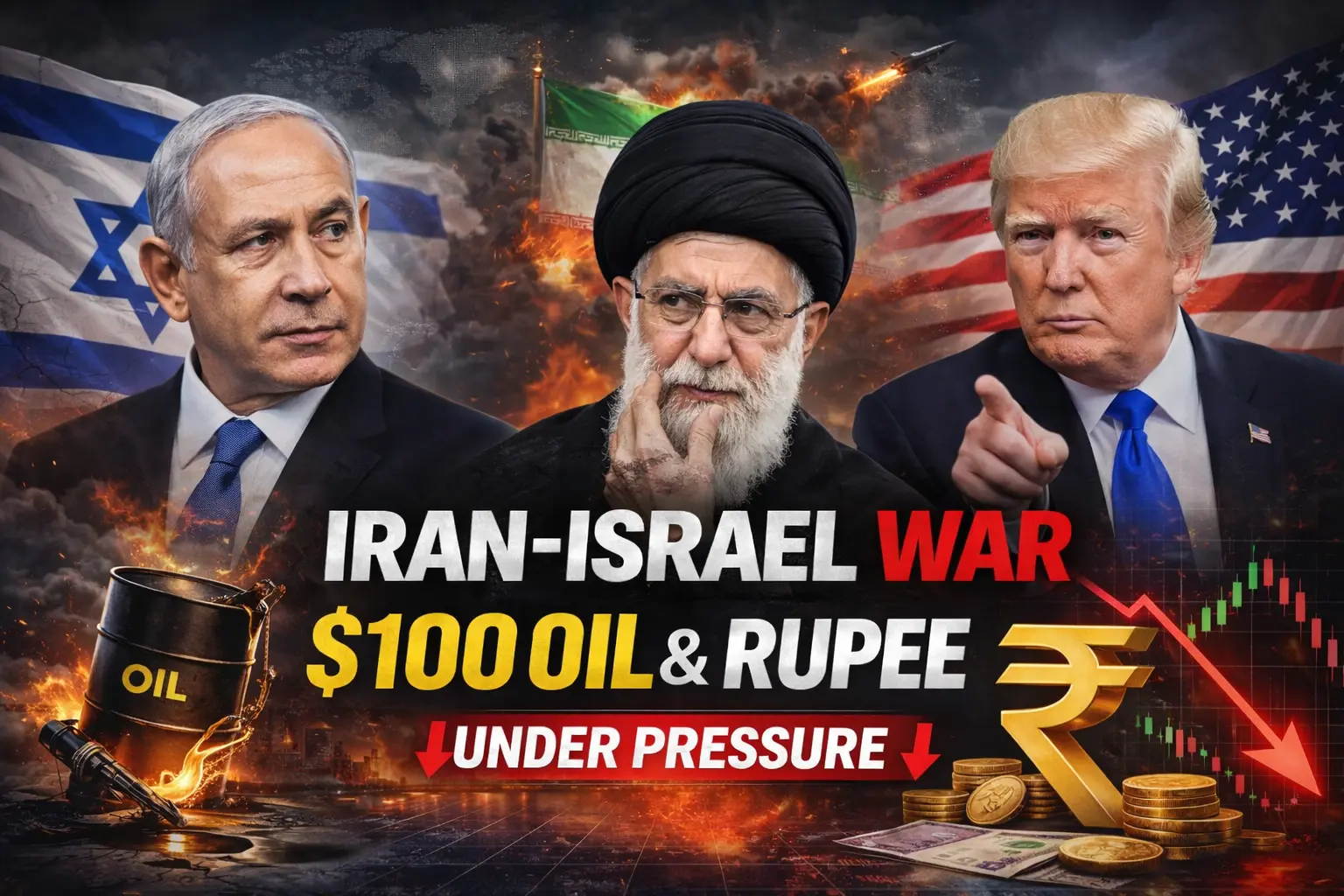
Iran-Israel war economic impact : In the financial sector, geopolitics is not just a trivial aspect; it plays a vital role. It significantly influences the market.
The conflict involving Iran, Israel, and the United States on February 28, 2026, has shown how swiftly military events can alter oil prices, currencies, stock markets, bond yields, and even personal budgets. For Indian investors, the economic effects of the Iran-Israel war are not a remote geopolitical issue—they are closely tied to fuel costs, SIP returns, the stability of the rupee, and inflation expectations.
This in-depth overview of 2026 explains what happened, why the market reacted so quickly, how crude oil weathered the initial shockwave, and what cautious Indian investors should keep in mind going forward.
What Exactly Happened in February 2026?
On February 28, 2026, the United States and Israel conducted coordinated strikes on important Iranian military and nuclear-related sites. Reports suggest that key infrastructure in several cities was targeted as part of a joint military operation. In retaliation, Iran initiated missile and drone strikes against U.S. assets in the region and Israeli land. This is where the Iran-Israel war economic impact begins.
Table of Contents
Why Financial Markets React Instantly to War
Financial markets respond primarily to three forces:
- Liquidity conditions
- Earnings expectations
- Risk perception
War increases risk perception dramatically.
When geopolitical uncertainty rises:
- Investors reduce exposure to risk assets (equities, emerging markets)
- Capital moves into safe havens (gold, U.S. dollar, government bonds)
- Oil prices rise due to supply fears.
- Volatility indices spike
This is commonly known as a “risk-off” shift.
For a large oil-importing economy like India, this shift carries macroeconomic consequences.
Oil & Energy Markets: The First Shockwave of the Iran-Israel War Economic Impact
The immediate Iran-Israel war economic impact is quickly seen in the global crude oil market.
The Middle East is a major contributor to global energy production, with about 20–30% of the global seaborne oil trade passing through the Strait of Hormuz. Any military escalation in this corridor instantly heightens the risk of supply disruption.
Without an actual blockade, the way disruption is seen leads to what traders call a “war premium”—a risk factor that’s added to the prices of crude oil.
Current Market Reaction
- Brent crude moved into the $70–75 range immediately after the February 28 escalation.
- Futures markets began pricing the possibility of Brent testing $100 per barrel if tensions persist.
- In extreme Strait of Hormuz disruption scenarios, analysts warn volatility could spike sharply higher.
Energy markets do not wait for confirmed shortages — they price risk in advance.
Why the Iran-Israel War Economic Impact Matters So Much for India
Importing over 80% of its crude oil, India considers energy prices a significant external factor in its economic landscape. This is where the economic fallout from the Iran-Israel war becomes directly relevant for Indian households, businesses, and policymakers. If crude prices stay high for a long time:
- India’s total import expenses will increase significantly.
- The current account deficit (CAD) will grow.
- The rupee will be under pressure to depreciate.
- Fuel and logistics costs will rise in all sectors.
- Headline inflation will speed up.
The government’s fiscal burden could increase if it partially absorbs the rise in retail fuel prices.
A consistent $10 increase in crude oil prices significantly affects India’s yearly external balance. For India, oil is more than a mere commodity—it influences currency stability, inflation patterns, fiscal assessments, corporate profits, and the RBI’s interest rate strategies.
The ongoing conflict between Iran and Israel might lead to higher oil prices, potentially hindering monetary easing, limiting liquidity expectations, and complicating macroeconomic management through FY26.
Leadership Shock & Escalation Risk
The news of Supreme Leader Ayatollah Khamenei’s death indicates an important turning point in the conflict.
If Iran opts for a more extensive ideological or military mobilization, the chances of regional spillover rise greatly. Markets view leadership changes as triggers for lasting instability, which can heighten the current war premium in oil prices.
A broader escalation in the Gulf would raise concerns about supply disruptions, likely driving crude prices up sharply and increasing global inflation expectations. At this point, the economic effects of the Iran-Israel war would reach beyond energy markets—intensifying currency volatility, causing capital to flee to safe havens, and raising risks to global growth.
This leadership change thus enhances the link between geopolitics and macroeconomic risk, highlighting the need to closely watch energy, currency, and inflation indicators.
Flight to Safety: Gold, Dollar, Bonds & Crypto in the Iran-Israel War Economic Impact
One of the clearest transmission channels of the Iran-Israel war economic impact is the classic “flight to quality” move across global asset classes.
When geopolitical uncertainty rises sharply, capital typically rotates out of high-beta risk assets and into perceived safe havens.
Gold: The Traditional Crisis Hedge
Historically, gold tends to thrive during geopolitical crises because it is regarded as:
- A hedge against inflation
- A means of currency protection
- A long-term value store in times of systemic stress
In 2026, gold has already seen strong inflows as investors reconsider geopolitical and inflation threats. Indian investors, in particular, have raised their allocations through gold ETFs and sovereign gold bonds to reduce portfolio volatility.
However, gold should be considered a stabilizer for portfolios—not a replacement for growth-oriented equity investments.
U.S. Dollar: Global Liquidity Anchor
During conflicts, the U.S. Dollar Index tends to rise due to:
- Its prominent position in global trade invoicing
- Increased need for U.S. currency. Treasuries in times of uncertainty
- The U.S.’s relative advantage in energy exports
A stronger dollar results in tighter global financial conditions. For India, this translates to:
- Pressure on emerging market currencies
- A higher effective import bill (especially oil)
- Intermittent depreciation pressure on the rupee
If crude remains elevated under the Iran-Israel war economic impact scenario, currency volatility may persist.
Bonds: Safety vs. Inflation Risk
Government bonds tend to attract investments during geopolitical shocks since investors prioritize capital protection.
However, if inflation driven by oil rises significantly, bond yields may not drop sharply and could stay elevated. This results in a complex dynamic where the demand for safety supports bonds, but inflation expectations limit price increases.
Bitcoin: The Digital Gold Question
While Bitcoin is called “digital gold,” it has often acted more like a risky asset during geopolitical tensions. Volatility often rises, but it doesn’t reliably provide crisis protection. Investors should not think that crypto automatically protects against macro risks related to war.
In the larger framework of the economic impact of the Iran-Israel war, traditional safe havens — including gold, the U.S. dollar, and high-quality sovereign bonds — still serve as the key defensive anchors.
Equity Market Impact: Risk-Off Rotation
Short-term volatility is typical in such events.
Likely market patterns:
- Foreign investors reduce high-beta exposure
- Oil-sensitive sectors face pressure (aviation, paints, chemicals)
- Defensive and defense-related stocks attract interest.
Defense Sector as Tactical Opportunity
Rising geopolitical tension increases expectations of higher defense spending globally.
In India, companies in aerospace, electronics, shipbuilding, and missile systems may see renewed investor attention. However, valuation discipline is critical after sharp rallies.
India’s Macro Vulnerability Assessment
Risk of Current Account DeficitIncreased crude imports are expanding India’s CAD. Even slight increases in oil prices can significantly affect the balance of payments calculations
Inflation Trends
Fuel influences:
- Transportation
- Manufacturing costs
- Food supply chains
Persistent oil prices over $90–100 could hinder disinflation efforts.
Growth Outlook
India remains structurally strong due to:
- Domestic demand
- Infrastructure capex
- Services exports
Unless conflict becomes prolonged and systemic, the long-term growth trajectory remains intact.
Strategic Portfolio Framework for 2026
1. Keep a Diverse Portfolio
A balanced distribution of stocks, bonds, and gold can help reduce volatility.
2. Keep an Eye on Oil-Related Investments
Review your holdings in industries that are heavily impacted by crude oil prices.
3. Utilize Gold as a Hedge, Not for Speculation
A prudent distribution (without over-concentration) can help stabilize your investments.
4. Remain Dedicated to SIPs
Historical trends indicate that geopolitical spikes usually normalize as uncertainty decreases.
5. Avoid the Temptation to Panic Sell
Temporary market downturns do not automatically indicate a fundamental failure.
FAQs: Iran-Israel War Economic Impact
Why is Israel fighting against Iran?
The causes of the conflict include a long-standing geopolitical rivalry, concerns about nuclear developments, and the influence of regional nations in the Middle East. The 2026 escalation involved direct military strikes and retaliatory actions, which significantly raised regional insecurity.
How does the Iran-Israel war economic impact affect global markets?
The conflict increases geopolitical risk, pushes oil prices higher, strengthens the U.S. dollar, boosts gold demand, and triggers volatility in stock markets worldwide.
Can oil prices cross $100 per barrel due to this conflict?
Yes—if the conflict affects supply routes (especially the Strait of Hormuz), we could see oil prices exceed $100 per barrel due to a higher risk premium and fears regarding supply.
How does the Iran-Israel war economic impact affect India directly?
India is heavily dependent on crude oil imports. Higher oil prices can widen the current account deficit, pressure the rupee, increase inflation, and complicate RBI policy decisions.
Should Indian investors change their investment strategy now?
Not overly so. Investors should preserve their diversification, keep their SIPs aligned with long-term objectives, and avoid making decisions driven by panic that are based solely on geopolitical headlines.
Iran-Israel War: Brent Crude Rally & Rupee Pressure on India
The 2026 Middle East escalation is a significant reminder that financial markets are intricately connected to geopolitics. The economic impact of the Iran-Israel war is reflected in oil prices, currency flows, bond yields, and equity valuations—all part of a macro chain reaction.
Wars make headlines. Markets create volatility. Disciplined investors build long-term wealth.
For Indian investors, the priority should not be on predicting military outcomes. It should be on managing risk intelligently through data, disciplined asset allocation, and liquidity planning.
India remains a domestic-demand-driven economy with greater macro resilience than in previous decades. While oil volatility linked to the Iran-Israel war can create short-term headwinds, structured diversification and portfolio balance are the most reliable defenses.
Monitor oil. Watch the rupee. Track inflation expectations.
Review your portfolio. Rebalance if needed. Stay diversified.
And most importantly, stay rational.