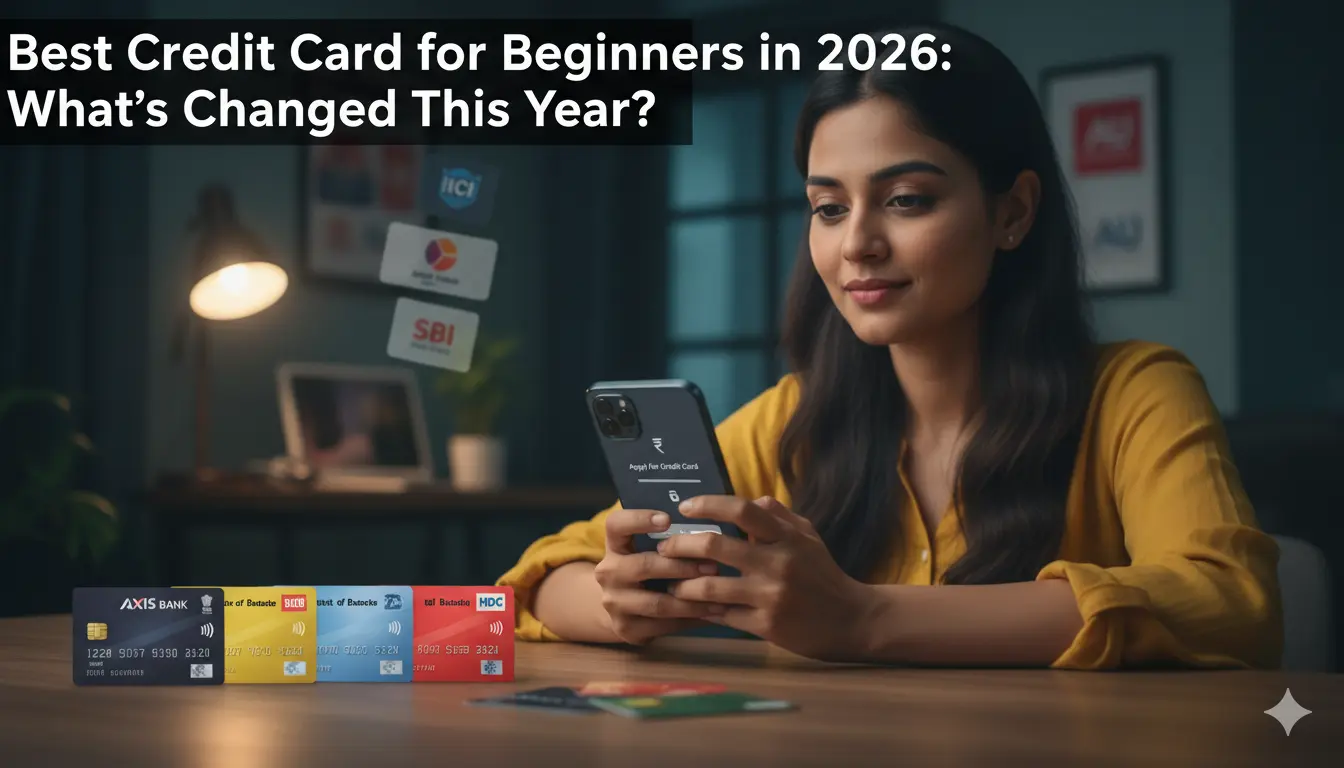
Best card for beginners: A credit card for beginners is a clever way to start your credit journey in India. I only used my first credit card for minor daily expenses like recharges and groceries, paying the bill in full every month—this helped me quickly establish a good CIBIL score without accumulating debt.
For beginners, a credit card should be viewed as a financial tool, not as free money. When used wisely, it can assist you in saving with cashback, managing your expenses, and building your credit history.
This guide highlights the best credit cards for beginners in India, including simple comparisons, pros, cons, and practical advice.
In 2026, the ideal credit card for those just starting out features easier approvals, more RuPay alternatives, and rewards that cater to beginners. At the same time, banks look for disciplined usage, which makes choosing the right card vital for improving your CIBIL score.
What Do You Mean by a Credit Card?
A credit card acts as a financial resource that enables you to borrow funds from a bank, allowing you to spend up to a specified limit and repay it later.
Instead of making an immediate payment from your bank account, the bank pays on your behalf, and you settle the amount later.
If you pay the entire amount before the due date, you can enjoy a period without interest. However, late or partial payments will lead to high interest and extra fees.
In simple terms:
- You get a credit card from a bank with a set limit.
- The bank pays first, and you pay back later.
- Paying on time can improve your CIBIL score, while delays can damage it.
Using a credit card wisely can be a great way for beginners to create a credit history and manage their spending smartly.
Table of Contents
What Are the 4 Types of Credit?
There are four key types of credit, and grasping them enables you to use credit more wisely:
- Revolving Credit: Credit cards are part of this group. You can reuse your credit limit and carry a balance if you don’t pay the entire amount (interest will be charged).
- Installment Credit: These refer to loans such as personal loans, car loans, or home loans that are repaid through fixed monthly payments over a specified duration.
- Open Credit: This is made up of utility bills, including electricity and postpaid mobile bills, which require full payment during each billing cycle.
- Service Credit: This refers to short-term credit for services, usually due within a short time and often without interest.
Being aware of these credit types helps beginners handle debt more efficiently and create a robust credit profile over time.
Best Credit Cards for Online Shopping & Cashback
The best credit cards for online shopping and cashback allow you to save money on common purchases like Amazon, Flipkart, food delivery, and bill payments.
With the right card, you receive instant cashback, reward points, and exclusive online deals—making every digital purchase more rewarding.
SBI Flipkart Credit Card
- 5% cashback on Flipkart
- 1% cashback on other spends
- Ideal for frequent online shoppers
Axis Flipkart Credit Card
- 5% cashback on Flipkart
- 4% on preferred partners
- Strong cashback structure
SBI Cashback Credit Card
- Flat 5% cashback on online spends
- No brand restrictions
HDFC Millennia Credit Card
- 5% cashback on popular apps
- Lifetime free on spend milestones
HDFC Swiggy Credit Card
- Up to 10% cashback on Swiggy
- Designed for food & grocery spends
Choosing the ideal cashback credit card is contingent on your shopping habits and how often you shop online.
When used effectively and paid in full each month, these cards can not only enhance your savings but also help you develop a solid credit history without incurring extra fees.
Best Credit Cards for Daily Expenses & Beginners
The best credit cards for beginners for daily expenses are created to enhance routine spending such as groceries, fuel, recharges, and bill payments.
These cards are simple to use, often come with low fees or no fees for life, and help beginners safely begin building their credit.
Axis Neo RuPay Credit Card
- Lifetime free
- UPI-linked credit card
- Best for first-time users
IDFC First Credit Card
- Zero annual fee
- High approval chances
- Ideal student/entry-level card
HDFC Pixel Go & Pixel Play Credit Cards
- App-based control
- Simple rewards structure
Click Here To Apply Now | Click Here To Apply Now
RBL Bank Credit Card
- Easy eligibility
- Suitable for low to mid-income users
For individuals starting out, the best daily-expense credit card should fit simple spending patterns and allow for easy repayment.When used responsibly and settled on time, these cards can help you save on everyday expenses while establishing a strong credit foundation for the future.
Best Travel & Lifestyle Credit Cards in India
Best card for beginners:The best travel and lifestyle credit cards in India cater to those who enjoy exploring, dining out, and benefiting from premium perks like flight and hotel advantages, airport lounge access, and lifestyle rewards.
These cards allow you to convert your travel and leisure spending into unique experiences and valuable rewards.
Axis My Zone Mastercard
- Dining & movie benefits
- Lifestyle-focused card
Axis Privilege Credit Card
- Reward points on travel & shopping
- Premium benefits
Axis Amex Privilege Credit Card
- American Express experience
- Travel & lifestyle perks
HDFC IRCTC Credit Card
- Railway ticket rewards
- Best for frequent train travellers
SBI IRCTC Rupay Credit Card
- 10% Cashback On AC IRCTC Booking
- 4 Complementary Railway Lounge Visit/year
- Upi Payment & Rupay offer built-in
BOB Eterna Credit Card
- Premium rewards
- Dining & lifestyle privileges
AU Bank Altura Credit Card
- Travel & lifestyle focused
- Good approval rates
Selecting the right travel or lifestyle credit card is influenced by how frequently you travel and your spending behaviors. When managed properly and paid off on time, these cards can enable you to earn rewards, access premium benefits, and improve your credit history—making every trip and lifestyle purchase more fulfilling.
Who Is Eligible for a Credit Card in India?
To apply for a credit card in India, you must fulfill certain basic eligibility requirements established by banks. While the exact requirements differ by card and issuer, most applicants should generally fit the following:
- Age: Usually between 21 and 60 years (some cards allow those aged 18+ with income verification)
- Income: A steady source of income (salaried or self-employed); the minimum income varies based on the card type.
- Credit Score: A CIBIL score of 700 or above is preferred, but newcomers can still qualify for starter or secured credit cards.
- Employment Status: Individuals who are salaried professionals, self-employed, freelancer or students (with specific cards) can apply.
- Residential Status: You must be a resident Indian and possess valid KYC documentation.
If you do not have a credit history, you can still qualify using secured credit cards (backed by fixed deposits) or entry-level beginner cards.
How Much CIBIL Is Required for a Credit Card?
Most Indian banks typically require a CIBIL score of at least 700 to grant approval for a credit card. Achieving a higher score boosts your chances of obtaining superior limits and rewards, while a low or absent score could narrow your options.
- Above 750—Excellent (premium cards)
- 700–749—Good (most cards approved)
- 650–699—Limited options
- Below 650—Secured or student cards recommended
As someone just starting out without a Cibil Score, you can still initiate your credit journey with secured or basic credit cards. By regularly making full payments on time, you’ll be able to build your score effectively and qualify for improved cards as you progress.
Credit Card Approval Tips
In India, the process of getting a credit card approved is simplified when you know what banks consider important. With the right preparation and prudent financial habits, even beginners can significantly improve their chances of approval.
- For better approval odds, maintain a CIBIL score of 700 or above.
- Keep your credit utilization rate below 30%.
- Always ensure bills are paid on time, including EMIs and utility payments.
- Select credit cards that fit your income and profile.
- Avoid submitting multiple credit card applications at the same time.
- If you’re just starting out, begin with a secured or entry-level credit card.
Following these uncomplicated credit card approval strategies not only raises your chances of being approved but also assists you in developing a solid and healthy credit profile for future loans and premium credit cards.
Advantages & Disadvantages of Credit Cards
A credit card is a valuable financial resource when used appropriately, but it has risks if mismanaged. Recognizing the benefits and drawbacks allows you to assess if a credit card aligns with your financial practices.
Advantages of Credit Cards
- Assists in developing and improving your CIBIL score with on-time payments
- Provides cashback, rewards, and discounts on regular spending
- Grants an interest-free period on purchases if paid on schedule
- Essential for emergencies and cash flow management
- Facilitates online payments and is accepted globally
Disadvantages of Credit Cards
- High interest rates on unpaid or partial balances
- Overspending can easily result in debt traps
- Late payments incur penalties and additional fees
- Having too many cards can negatively impact your credit score
- Annual fees might be charged if benefits are not utilized correctly
When managed wisely, credit cards provide convenience, savings, and help in building credit. However, it is crucial to use them responsibly and pay off the full amount on time to prevent debt and maximize the advantages of your credit card.
FAQs About Credit Card for Beginners
Which Bank Is Best for Credit Cards in India?
There isn’t one best bank for all. In India, HDFC Bank, SBI Card, Axis Bank, and ICICI Bank are viewed as the best for credit cards due to their diverse card options, strong rewards, good acceptance, and trustworthy customer service.
What Is the Biggest Problem With Credit Cards?
The biggest problem with credit cards is overspending and high interest rates. If bills are not paid in full on time, interest can go up to 36–48% per year, leading to debt and a lower CIBIL score.
What Is the Minimum Payment on a Credit Card?
The minimum payment on a credit card is usually 5% of the total outstanding amount. Paying only the minimum avoids late fees but attracts heavy interest on the remaining balance.
What Happens If I Use 90% of My Credit Card Limit?
Using 90% of your credit card limit increases your credit utilisation ratio, which negatively impacts your CIBIL score. Ideally, you should keep usage below 30–40% of your total limit.
What Happens If I Put Extra Money on My Credit Card?
If you put extra money on your credit card, it becomes a credit balance. This amount will be adjusted against future purchases or refunded by the bank on request.
Final Take: Choosing the Right Credit Card Is About Discipline, Not Limits
Best card for beginners: A credit card functions best as a financial resource, not as extra income. Its real advantage comes from disciplined usage—timely bill payments, low utilization, and avoiding unnecessary debt.
Choose a card that suits your spending habits, not one with the highest limit. When used responsibly, a credit card can enhance your CIBIL score, lower future borrowing costs, and provide real rewards. Ultimately, control is more crucial than credit limits.