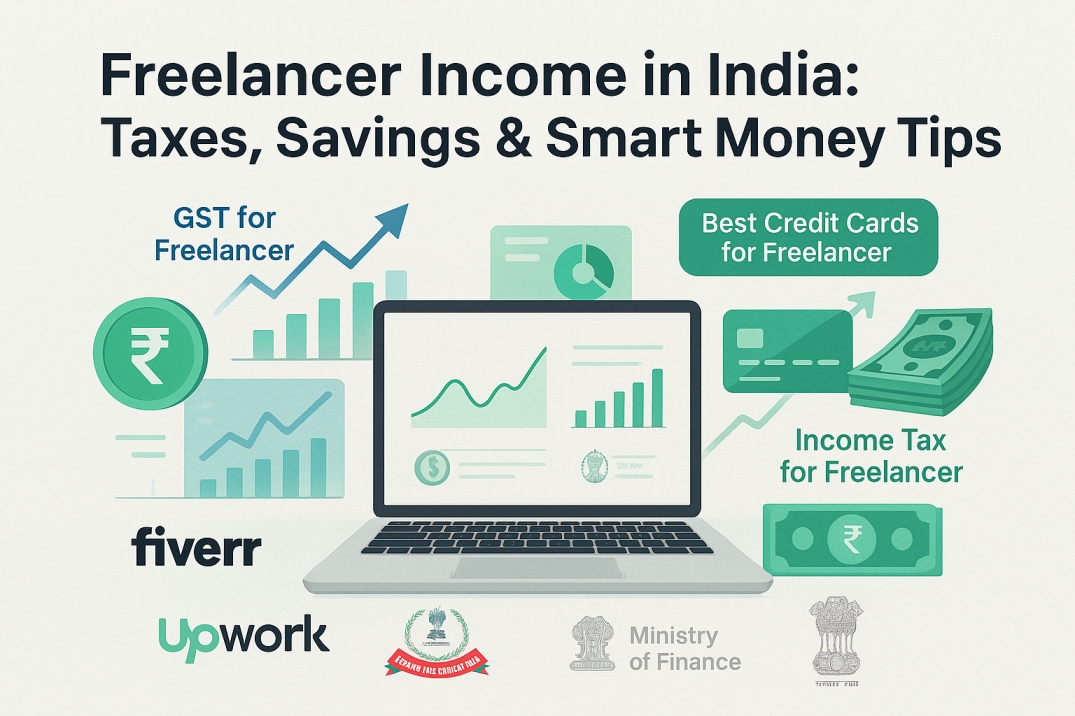
In India, the rapidly growing gig economy is driving freelancer incomes, which are projected to reach ₹20-30 billion by 2025. Autonomy and the potential for good earnings attract millions, but managing irregular income, taxation, and savings can be challenging. This comprehensive guide to 2025 provides everything you need to grow and secure your freelancer income—from smart budgeting and tax preparation to credit solutions and wealth-building strategies. Whether you’re just starting out or earning over ₹1 lakh per month, these practical methods will enable you to effectively manage your finances and achieve long-term financial success.
Freelancer Income & Earning Strategies
Freelancers regularly experience variable income patterns, rendering effective financial planning vital. Here’s a guide on how to earn, keep track of, and increase your freelancer income in 2025:
1. Diversify Your Freelancer Income Streams
- Provide services on platforms such as Upwork, Fiverr, and Freelancer.in.
- Develop digital products, online courses, or e-books to generate passive income.
- Acquire retainer clients to guarantee consistent monthly earnings.
2. Track Every Payment in Freelancer Income
- Make use of accounting platforms such as QuickBooks, Zoho Books, Wave, or ET Money to record invoices and expenses.
- Track incoming payments from UPI, Payoneer, PayPal, and bank transfers.
- Maintain a dedicated business account distinct from personal funds for greater clarity and more effective financial management.
3. Set Accurate & Realistic Rates
- Establish hourly or project-based pricing while considering expenses, taxes, and savings aspirations.
- Formula: Monthly Expenses + Savings Target + Tax Provision = Required Monthly Income
- Continuously review and update rates to correspond with skill enhancement and market trends.
4. Budget & Save Effectively
- Utilize the 50:30:20 model: 50% for essentials, 30% for lifestyle, and 20% for savings/investments.
- Keep an emergency fund that can last for 3 to 6 months of living expenses. Automate your ongoing payments and reserve funds for taxes.
- Open a current account that is friendly to freelancers with trustworthy banks such as HDFC, Axis, ICICI, or other banks.
Through the use of these techniques, you can safeguard your freelance income, ease financial pressures, and prioritize the sustainable development of your freelance career.
Table of Contents
Credit & Loan Options for Freelancers
Gaining access to credit can be difficult for freelancers since most banks prefer stable salaries. However, contemporary banks and fintech platforms are now recognizing the earning potential of the gig economy. With the right approach, you can establish credit, qualify for loans, and use financial products to strengthen your freelancer income.
1. Credit Cards Designed for Freelancers
Freelancers can now access premium credit cards without freelancer income proof, using self-employed documents, ITR proofs, or bank statements.
Best Credit Cards for Freelancer:
- The HDFC Regalia First, Axis Bank My Zone, ICICI Platinum, and Citi Cashback cards are notable options.
- Additionally, some fintech or business cards, including the Airtel Axis Business Card, provide expense-tracking dashboards along with cashback on tools for business use.
Tips for Smart Use:
- Start off with a secured credit card tied to a fixed deposit if you lack freelancer income verification. For example, a fixed deposit of ₹10,000 can secure a credit limit of ₹9,000—a straightforward way to create a repayment history.
- Make use of your card for recurring payments like internet, phone, and subscriptions to achieve minimum spending and earn cashback.
- Always ensure you pay your full dues on time and maintain your utilization below 30% to keep a strong CIBIL score.
2. Personal Loans Without Salary Slips
Freelancers have the option to access personal loans with alternative income proofs such as:
- Bank statements, ITR filings, or GST returns that reflect steady deposits.
- Investment or rental income documentation to improve eligibility.
Where to Apply for a Personal Loan for a Freelancer:
- Lenders in the fintech space, including Fibe, KreditBee, InCred, and LazyPay, cater specifically to self-employed individuals.
- In contrast, conventional banks like HDFC, Axis, SBI, and ICICI often approve loans by evaluating your income tax return and regular account inflows.
- To boost your likelihood of getting approved, consider adding a co-applicant, like a spouse or parent with a reliable income.
Tip: Keep your CIBIL score above 750 and check reports regularly for errors. A higher score means faster approvals and better interest rates.
3. Maintain Financial Discipline
- Maintain a distinct current account for your business and personal finances.
- Track your income and expenses with tools like ET Money, Money View, or Zoho Books.
- Keep your GST and ITR filings up to date for smoother credit processing.
- To prevent further debt stress, borrow wisely and schedule your EMIs according to your freelance income cycle.
By following these strategies, you can develop a credit history, access financial products with assurance, and manage your freelancer income more sustainably while aiming for long-term career success.
Taxes & Compliance for Freelancers
Freelancers must effectively handle their taxes to remain compliant, steer clear of problems, and benefit from all available deductions. A clear tax plan not only saves money but also strengthens your financial reputation, which is vital for enhancing your freelancer income.
1. GST Registration for Freelancer
- GST registration becomes compulsory when your yearly turnover surpasses ₹20 lakh (₹10 lakh for special category states).
- Register effortlessly via the official GST portal and submit returns either monthly or quarterly based on your business volume.
- Filing on time ensures compliance and helps you steer clear of late fees or penalties.
2. Income Tax Filing for Freelancer
- Freelancers must file ITR-4 (under the Presumptive Taxation Scheme) if their annual earnings are less than ₹50 lakh, or ITR-3 for those who have higher or multiple sources of income.
- To decrease taxable income, deduct all business-related expenses such as internet bills, software subscriptions, marketing costs, or home office expenses.
- If your annual tax liability exceeds ₹10,000, be sure to pay advance tax in quarterly installments to avoid interest penalties.
3. Record-Keeping & Tools for Freelancer
- Keep all invoices, bank statements, and GST filings systematically organized for convenient access during audits or renewals.
- Employ trustworthy tax tools such as ClearTax, Quicko, or Zoho Books to automate calculations and ensure accurate filing of returns.Make sure
- Make sure to back up all documents digitally for prompt retrieval and year-end reporting.
Through the application of these tax methods, you can lessen compliance anxiety, enhance savings, and oversee your freelancer income more proficiently while ensuring full compliance with India’s tax regulations in 2025.
Future Trends in Freelancer Finance
The freelance sector in India is moving into an exciting new stage. With the swift advancement of digital transformation, the management of freelancer income is likely to become more efficient, transparent, and fully reliant on technology.
1. Rise of Digital Payments & AI Tools
Freelancers are quickly embracing digital payment systems, automated invoicing, and AI-driven financial tools to streamline billing, budgeting, and client management.Modern fintech applications now combine tax filing, expense monitoring, and savings into a single dashboard—minimizing manual tasks and mistakes.
2. Fintech Products Tailored for Freelancers
Banks and fintech organizations are crafting new financial solutions for the gig economy—from low-minimum SIPs and digital NPS initiatives to current accounts that cater to freelancers and instant credit alternatives. These developments support freelancers in saving, investing, and accessing funds even when they do not have regular salaries.
3. Expanding Gig Workforce & Financial Inclusion
India’s freelance labor force is forecasted to grow from 7.7 million to upwards of 23 million by 2030, which will drive a strong need for specialized financial and tax services.As the gig economy’s market value approaches ₹20–30 billion by 2025, financial institutions will continue to adjust their offerings to support freelancers with personalized investment, insurance, and credit services.
4. Staying Ahead of Regulatory & Market Changes
Freelancers are advised to keep an eye on updates in tax rules, GST guidelines, and investment opportunities. Early adaptation to new policies or fintech trends can improve compliance, enhance savings, and ensure financial security in the long run.
By staying updated, upgrading your tools, and following smart financial habits, you can protect your freelance income for the future, grow your wealth in a sustainable way, and keep up in India’s shifting freelance landscape.
Freelancer Income FAQs: Manage Taxes, Loans & Savings
How can freelancers manage irregular income effectively?
Think about establishing a consistent monthly “salary” based on your earnings, and make sure to have a cushion for the slower months.Apply budgeting strategies such as 50:30:20 (designating funds for necessities, lifestyle, and savings) and automate your savings or investments to foster stability in your freelancer income.
How to track freelance income efficiently?
Utilize software such as QuickBooks, Zoho Books, or Wave for handling invoices and expenses.
Maintain distinct accounts for business and personal finances, and consistently monitor all UPI, Payoneer, and bank transactions.
How much tax do freelancers pay?
The Income Tax Act of India establishes tax rates according to income slabs.Freelancers can decrease their taxable income by utilizing deductions for business expenses, insurance, and investments in ELSS, NPS, or PPF.
Do freelancers need to file GST?
Of course, GST registration is required if your annual turnover exceeds ₹20 lakh (or ₹10 lakh for special category states).
Once you are registered, freelancers are obligated to file returns either monthly or quarterly to ensure they remain compliant.
Can a freelancer get a loan without salary slips?
Certainly. Both banks and fintech platforms are now open to alternative proofs, including bank statements, GST filings, or ITR documents for securing loan approval. HDFC, Axis, and SBI offer personal loans to self-employed professionals based on reliable income documentation.
Which credit card is best for freelancers in India?
Best Credit Cards for Freelancers Including HDFC Regalia, Axis My Zone, and ICICI Platinum cards. These cards offer flexible documentation, cashback, and rewards, making them suitable for freelancers overseeing business expenses.
How can freelancers save for retirement in India?
The ideal investment for freelancers consists of the NPS (National Pension System), PPF, or mutual fund SIPs to protect their long-term financial interests. Implementing automatic monthly contributions allows for gradual wealth accumulation and ensures a reliable retirement fund.