Determining the suitable insurance policy plans in India may seem overwhelming, yet they are vital for your financial security. Insurance plans function as a safety net, covering unexpected expenses—from health crises and accidents to travel issues or even the care of your pets. By paying a small premium, you transfer the financial risk to the insurer, which helps in managing substantial losses.
This guide elucidates insurance plans in clear Indian English, aiding you in selecting coverage for your family, health, assets, and travel while avoiding unnecessary extras.
What Is Insurance?
An insurance policy is a formal agreement whereby you pay a set fee referred to as a premium, and in return, the insurer promises to indemnify you for particular losses or incidents. Simply put, insurance policy plans serve to shield you from unexpected financial burdens—whether it involves a hospital charge, an accident, or damage to your automobile or home.
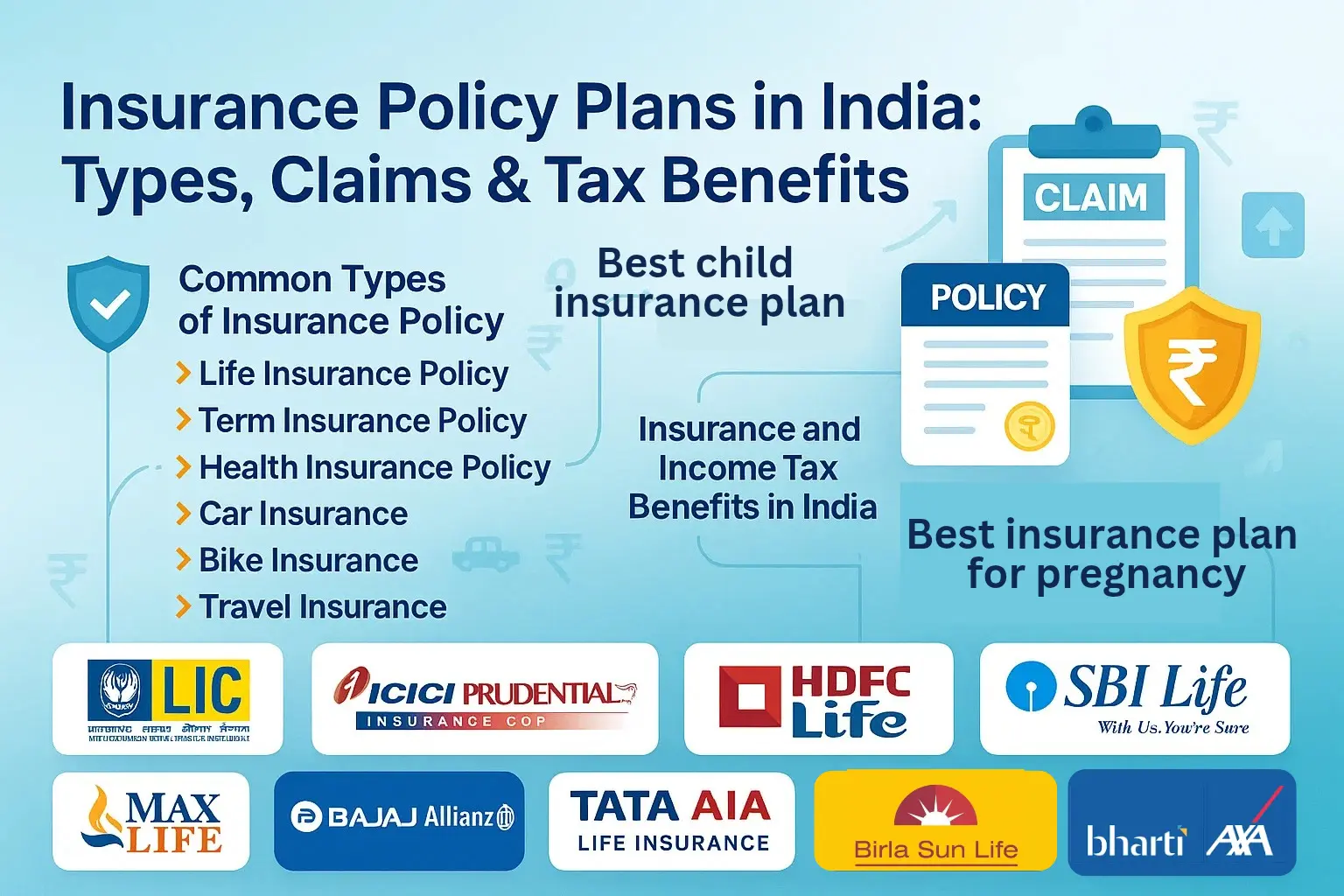
Common Types of Insurance Policy Plans in India
Here are the significant types of insurance plans you should be aware of:
- Life Insurance—This includes term, endowment, ULIP, and whole life plans.
- Health Insurance—This covers individual, family floater, maternity, and critical illness needs.
- Motor Insurance—This protects cars and bikes from accidents, theft, or damage.
- Travel Insurance—Available as single-trip, multi-trip, student, or senior citizen plans.
- Pet Insurance—For medical care and emergencies for dogs and cats.
- Home Insurance—Safeguards your home from fire, theft, or natural disasters.
- Specialty Covers—Business, freelancer liability, cyber, and professional indemnity insurance are included.
Why Insurance Policy Plans Matter
Think about this: your sibling relocates internationally and needs travel and health insurance; your friend’s bike has a little accident; your neighbor is welcoming a new baby and is concerned about maternity costs. The right insurance policy can protect your savings, prevent unexpected debts, and help you achieve long-term goals like education, retirement, and emergencies—all while minimizing stress.
Table of Contents
Why Insurance Policy Plans Are Important
Choosing the correct insurance policy plans in India can be quite challenging. The complex jargon, various riders, and premium alternatives can make it easy to feel lost. However, the right plan makes your life easier—protecting your family, health, assets, and travel plans without overspending.
Insurance functions as your financial safety net. By paying a small premium, you shift significant financial risks to the insurer. Whether it is a health emergency, an accident, or even your pet’s illness, insurance changes potential financial crises into manageable expenses.
How Insurance Is Regulated in India
In India, the regulation of all insurance policy plans falls under the Insurance Act of 1938 and is supervised by the Insurance Regulatory and Development Authority of India (IRDAI).
IRDAI ensures that insurers act transparently, safeguard the interests of policyholders, and maintain financial stability.
Insurance premiums are usually subject to GST, with rates that may vary according to the product and rider type. Always verify the latest IRDAI circulars and policy documents for accurate information before acquiring any plan.
How to Choose the Right Insurance Policy Plans
- Identify Your Risks: Address significant financial dangers such as medical expenses, loss of income, damage to vehicles or travel, and liabilities related to pets or work.
- Prioritize Coverage: Life Insurance: Important if you have people depending on you.
- Health Insurance: Necessary for everyone.
- Motor/Home Insurance: Safeguards important assets.
- Specialty Covers: For pets, travel, or specific professional requirements.
- Set the Right Coverage: Life cover = 10–15 times your yearly income.
- Health cover = average hospital expenses in your area.
- Compare Plans: Look at exclusions, co-payments, waiting times, room rent caps, and hospital networks.
- Use Add-ons. Wisely: Only purchase essential riders like critical illness or accident coverage.
- Check Claim Ratios: Choose insurers with high claim settlement rates and clear processes.
Key Principles and Functions of Insurance Policy Plans
7 Key Principles
The utmost good faith, insurable interest, indemnity, contribution, subrogation, proximate cause, and minimizing losses.
Main Roles
Managing risk, ensuring financial security, capital creation, and social protection—all achieved through properly structured insurance policy plans.
Specialized Covers & Situational Tips—Insurance Policy Plans
- Home & Family Insurance: Provides protection for property, personal belongings, and family health. For parents or couples contemplating children, consider exploring maternity riders and child protection plans.
- Freelancers & Self-Employed: Obtain term life, health, and professional liability insurance.
- Women & Senior Plans: Certain insurers have plans designed specifically for women and seniors, featuring customized benefits.
- Affordable Digital Policies: Online insurers such as Acko, Digit, and Tata AIG provide low-cost insurance policy options for vehicles and more.
- Government Schemes: Programs like Pradhan Mantri Jeevan Jyoti Bima Yojana (life insurance) and Sukanya Samriddhi Yojana (girl child savings) enhance private insurance plans.
Quick Tips to Choose the Best Insurance Policy Plans
- Term vs. Life Insurance: Term is dedicated to pure protection; in contrast, life insurance provides both coverage and savings.
- Health Cover: Aim for a minimum coverage of ₹5–10 lakh for each family.
- Pet Insurance: Be sure to check the waiting periods and the illnesses that are covered.
- Always compare, tailor, and review your plan on an annual basis to ensure your coverage meets your needs.
In India, insurance policy plans are overseen by IRDAI and crafted to provide financial security throughout all phases of life—whether it’s for health, home, travel, or business. By assessing your risks, evaluating coverage options, and selecting trustworthy insurers, you can create a robust safety net that safeguards your family, belongings, and future with assurance.
How Much Will Insurance Cost?
The expense of insurance policy plans is determined by multiple factors—your age, health, lifestyle, occupation, policy duration, and the sum insured. Smokers or those in high-risk jobs usually face higher costs.
To obtain precise estimates, always use the premium calculators available on insurance provider websites. For term insurance plans, the premium variations between different insurers can be significant, so it’s important to compare sample quotes with the same terms and coverage before you choose.
Insurance and Income Tax Benefits in India
In India, insurance policies serve to protect finances and provide important income tax benefits. Premiums for health insurance can be deducted under Section 80D, while life insurance payments are exempt under Section 80C. The maturity amount from a life insurance plan is usually tax-free under Section 10(10D), as long as the premium does not exceed 10% of the sum assured. However, if the insurance policy premium is over ₹5 lakhs, the maturity proceeds may be taxed as ‘Income from Other Sources.’ These insurance deductions and benefits make insurance a powerful way to reduce tax liability and improve your financial planning.
Documents Required to Buy Insurance Policy Plans in India
When you buy any insurance policy plans, you’ll require some essential documents for verification:
- PAN / Aadhaar / Photo ID
- Proof of address (like a utility bill, passport, or voter ID)
- Proof of age (such as a birth certificate, school leaving certificate, or passport)
- Medical reports (needed for life or health plans, if the insurer asks for them)
- For pet insurance: vaccination and health records might be necessary.
Having these documents prepared helps expedite the policy issuance and prevents delays during the verification process.
How to File an Insurance Claim — Simple Steps
Filing a claim with your insurance policy is not difficult if you follow these vital steps:
- Please kindly reach out to your insurer without delay using both phone and email.
- Kindly submit the claim form along with necessary documents—like hospital bills, FIR (for accidents), or repair invoices (for vehicles).
- For cashless claims, your insurer will coordinate directly with the hospital or repair center.
- When submitting reimbursement claims, it is important to keep all original receipts and send them in within the specified timeframes. The insurer will process the claim according to the terms of the insurance policy plans.
FAQs — Insurance Policy Plans in India
What are the main types of insurance policy plans in India?
There are two main types of insurance: life insurance (which includes term, endowment, ULIP, and whole life) and general insurance (covering health, motor, travel, home, pet, and more). For instance, motor insurance is required by law, whereas health and life insurance are highly advised for ensuring financial stability.
What is meant by term insurance?
Term insurance is a specific type of life insurance policy that offers essential protection. You are required to pay regular premiums for a set duration, and if the insured person dies within that term, the designated nominee will receive the assured amount. This insurance is one of the most affordable options available, providing high levels of coverage, but it does not yield a maturity value unless you select a return-of-premium option.
How is premium calculated in insurance?
When it comes to insurance, the premium is calculated using factors such as your age, health, the amount of coverage, the policy term, and your lifestyle habits.
Higher coverage or taking on more risk (like smoking or working in hazardous jobs) will bump up your premium.
Use online insurance calculators to check out different plans and find the best value for your needs.
Is insurance mandatory in India?
Only specific types are required—bike insurance (at least third-party liability) is legally mandated. Other types of coverage, such as health, life, or home insurance, are optional but crucial for financial security.
How has GST affected insurance policy in India?
The Goods and Services Tax (GST) has a direct effect on the pricing of insurance policies. Starting September 2025, the GST rate for personal health and life insurance will drop to 0%, which means premiums could go down by around 18%. But keep in mind, since insurers won’t get input tax credits, the actual prices might differ a bit from one company to another. It’s a good idea to verify the current GST rates before purchasing or renewing your policy.
Who regulates insurance policy plans in India?
The Insurance Act of 1938 regulates all insurance, and the Insurance Regulatory and Development Authority of India (IRDAI) oversees it. IRDAI is responsible for ensuring transparency, solvency, and fair treatment for policyholders.
What documents are needed to file an insurance claim?
You must have the claim form, identification proof, policy document, and necessary bills—such as hospital invoices, FIRs, or repair estimates.
For a seamless cashless health claim experience, make sure the hospital is part of the insurer’s network.
Conclusion
Choosing the suitable insurance policy plans ensures the safety of your future, your family, and your pets. Whether it’s a term, health, motor, or travel plan, making the right choice today provides financial peace of mind for tomorrow.
Insurance may appear daunting, but at its essence, it’s about lessening financial uncertainty. By understanding fundamental principles and wisely comparing policies, you can develop a well-rounded protection portfolio—including life, health, travel, and pet coverage.
Take Action:
- Review your coverage needs thoroughly.
- Check the adequacy of your life and health insurance policies.
- Ensure that you renew your vehicle and travel plans on time.
- Compare leading insurers online and utilize calculators for accurate premium assessments.
- Start with small steps, but make sure to begin today—your future self will express gratitude.