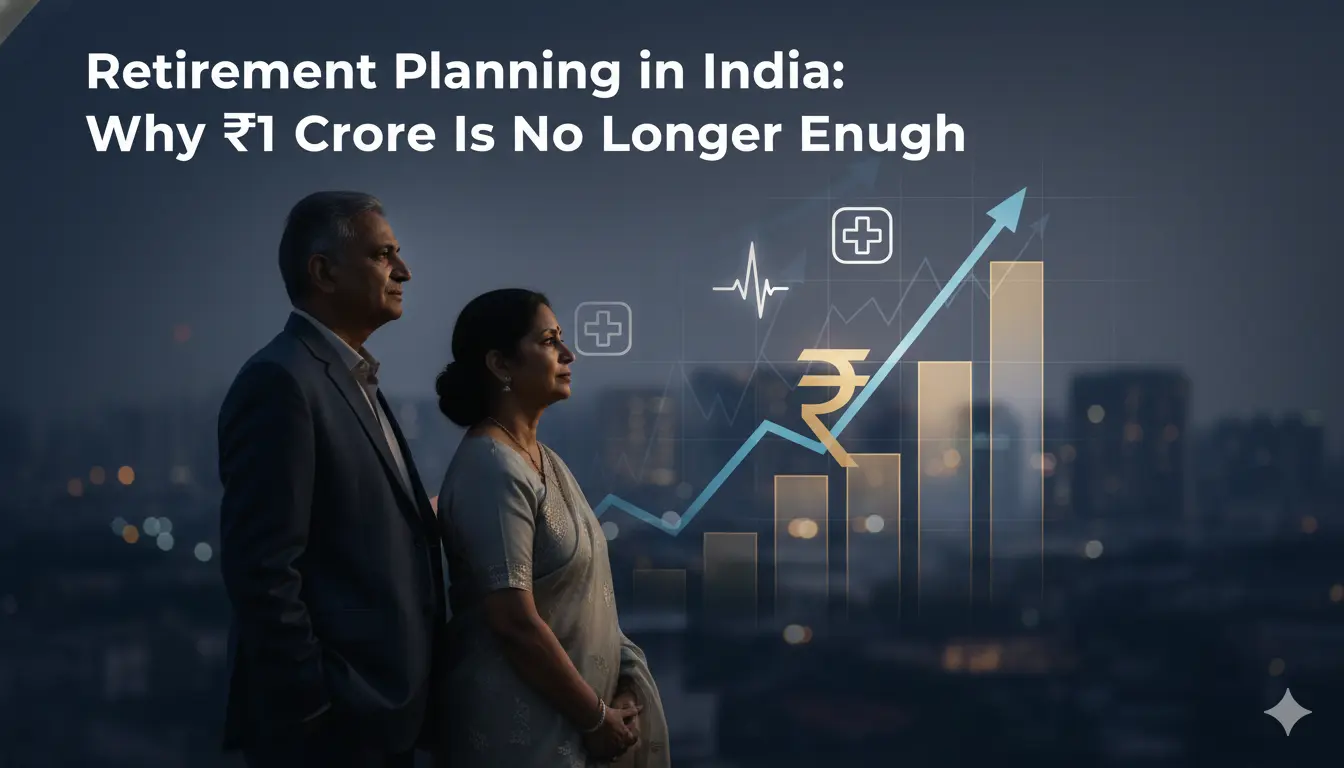
Retirement planning helps Indians create a stable financial future by managing savings, investments, inflation, and longevity risks.
As life expectancy grows, social security is limited, and healthcare costs are high, retirement planning in India has become vital.
In essence, it ensures that your lifestyle does not decline when your salary is no longer available.
What Is Retirement Planning?
Retirement planning is the process of estimating your post-retirement expenses and building a financial corpus today to support those expenses for 25–30 years after you stop working.
In the Indian context, it means preparing for:
- Rising inflation
- Medical emergencies
- Longer life expectancy
- Reduced dependence on family or government support
Table of Contents
Why Retirement Planning Is Important in India
Three major shifts have made retirement planning vital:
- Longer life expectancy—Many Indians now survive 20–25 years after they retire.
- Inflation concern—₹1 today might only equal ₹35–₹40 in 30 years.
- Insufficient social security—There is no universal pension as seen in developed nations.
If planning is not done properly, retirees could run out of money.
The 7-Step Retirement Planning Process In India
Set specific goals, calculate future costs, account for inflation, invest wisely, select a safe withdrawal rate, obtain health coverage, and review often to guarantee a stable, stress-free retirement.
Define Your Retirement Goals
First, imagine what your retirement will be like. This helps you determine the correct savings amount and prevents you from saving either too little or too much.
- Set your retirement age.
- Select where you want to live: in a city, a Tier-2 area, or your hometown.
- Clarify your lifestyle preferences: basic, comfortable, or high-end.
- Include plans for travel, hobbies, and health needs.
Estimate Monthly Retirement Expenses
Identify the amount you will need each month after retiring by detailing all essential and lifestyle expenses.
- A practical estimate is crucial for good planning and helps avoid future shortages.
- Household costs (food, utilities, maintenance).
- Medical and healthcare expenses.
- Travel, hobbies, and leisure spending.
- Emergency and contingency buffer.
This estimate is the basis for any retirement planning calculator.
Adjust Expenses for Inflation
Never plan retirement using today’s costs. Inflation steadily erodes purchasing power, making future living and medical expenses much higher. Always project expenses in future value to avoid falling short after retirement.
Choose the Right Asset Allocation
Create a balanced portfolio by spreading investments across equity for long-term growth, debt for stability, and guaranteed options for capital safety.
Decide a Safe Withdrawal Rate
In India’s high-inflation environment, a conservative withdrawal rate of 3%–3.5% helps ensure your retirement corpus lasts longer.
Protect with Health Insurance
Healthcare expenses increase rapidly with age, so having a comprehensive health insurance plan is essential to protect your savings.
Review & Rebalance Regularly
Track your portfolio every 1–2 years or after major life changes to rebalance assets and stay aligned with your retirement goals.
Retirement Planning Calculator in India: Why It Matters?
A retirement planning calculator indicates how much money you will need and how much you should save each month to reach that target.
By taking into account inflation and expected returns, it offers a realistic assessment of your retirement preparedness.
Fill in details like your current age, retirement age, monthly expenses, inflation rate, and expected returns—the earlier you do this, the easier it is to plan with smaller SIPs.
Best Retirement Planning Options in India
Remember that the right retirement planning strategies in India are essential for ensuring a safe and inflation-proof future.
An effective combination of guaranteed options and market-linked investments supports steady income, long-term growth, and financial stability in retirement.
1. EPF (Employee Provident Fund)
Employee Provident fund (EPF) is perfect for salaried workers and serves as a solid base for retirement planning. It provides stable, government-supported returns along with tax advantages, making it a low-risk, long-term savings choice.
2. NPS (National Pension System)
National Payment System (NPS) is an affordable, market-linked retirement plan ideal for long-term investors. It offers extra tax benefits under Section 80CCD(1B) and permits partial equity investment, aiding the growth of your retirement fund over time.
3. Retirement Mutual Funds
Mutual funds play a crucial role in combating inflation. In the initial years, equity funds are ideal for growth, whereas hybrid or debt funds can help minimize risk as retirement nears. Regular SIPs promote disciplined and flexible investing.
4. Retirement Plans Based on Insurance
These plans are designed for disciplined savers who favor structured investments. However, they frequently come with higher fees and reduced flexibility, so it’s vital to compare returns, costs, and features before investing.
Benefits of Retirement Plan
Good retirement planning provides you with confidence and control in your later life.
It ensures you are financially independent, meaning you won’t have to lean on family for regular expenses.
Investing wisely also protects against inflation, allowing your savings to retain their purchasing power.
Common Retirement Planning Mistakes to Avoid
A significant number of people find retirement tough due to mistakes that could have been avoided.
Starting investments later puts more strain on monthly contributions, and neglecting inflation may cause future costs to be underestimated.
Healthcare expenses are often disregarded and can rapidly diminish savings. Being too careful at the beginning can restrict growth, and not frequently reviewing or adjusting can upset your financial strategy.
Simple Retirement Planning Example
If your current monthly expense is ₹40,000, then with 6% inflation, it could rise to around ₹1.7 lakh per month after 25 years. This means almost ₹20 lakh annually.
To safely produce this income following the 3.5%–4% withdrawal rule, you would require a retirement fund of about ₹5–6 crore.
This aspiration can only be fulfilled if you start early and invest regularly through SIPs.
After Retirement: How to Manage Your Money
The process of retirement planning does not stop when you leave the workforce. It is crucial to keep 2–3 years of expenses in liquid assets to manage unexpected situations and market volatility. As you age, gradually move your portfolio towards lower-risk investments. Use a Systematic Withdrawal Plan (SWP) rather than relying on fixed deposit interest for greater tax efficiency, and conduct an annual review of your withdrawal strategy to ensure it supports long-term sustainability.
Frequently Asked Questions (FAQs)
Q1. What is the best age to start retirement planning?
The earlier, the better. Starting in your 20s or 30s dramatically reduces monthly investment pressure.
Q2. What is the 4% rule in retirement planning?
It suggests withdrawing 4% annually. In India, a safer range is 3%–3.5%.
Q3. How does inflation affect retirement planning?
Inflation reduces purchasing power, making future expenses much higher than today.
Q4. Which is the best retirement planning option in India?
A balanced mix of EPF, NPS, and mutual funds works best for most people.
A Comfortable Retirement Is Built Long Before Your Last Salary
Retirement planning involves more than simply increasing income or participating in high-risk investments; it fundamentally requires beginning early, following a disciplined strategy, and consistently reviewing your plan as your life and financial circumstances evolve. Consistent, small investments made over time can accumulate into a significant retirement fund, while regular evaluations enable you to stay ahead of inflation and unexpected financial demands.
Avoid delays. Begin an SIP today or use a retirement planning calculator to gauge your preparedness—and uncover what slight modifications you can adopt now to secure a safe and stress-free retirement later on.