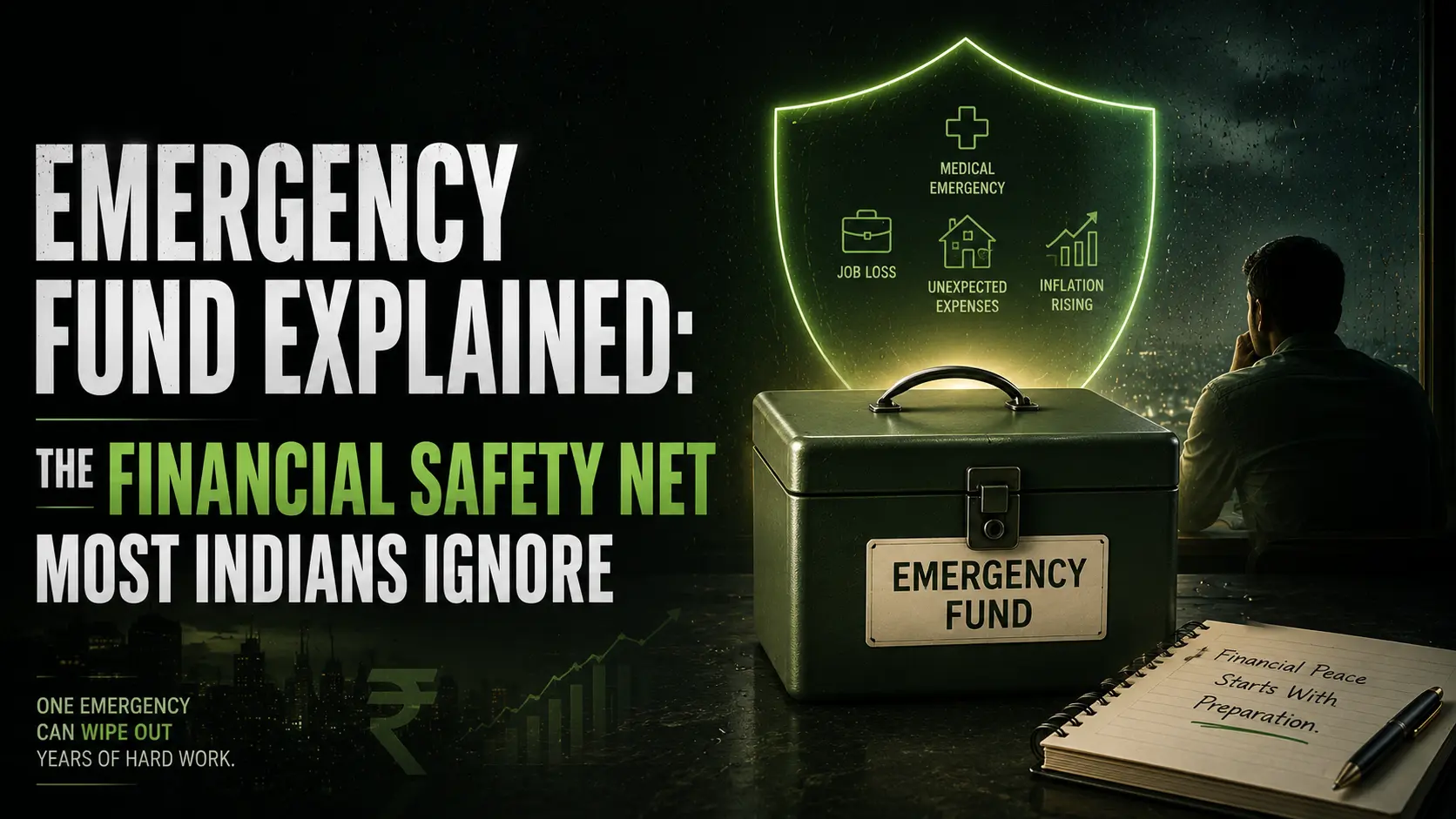
One emergency can wipe out years of savings faster than a market crash.
A single hospital bill. A sudden layoff. An urgent family expense.
And suddenly, SIPs stop, investments break, and debt begins.
That’s why an emergency fund is not “extra savings”—it”‘s financial survival capital.
India is witnessing rising costs of living, medical inflation is an issue and job uncertainty is at an all-time high. Emergency savings have become more important than ever in 2026. Yet most people still ignore it until a crisis forces them into loans or credit card debt.
The harsh reality?
A almost all of Indian family households experience problems to comfortably manage a ₹30,000 emergency funds get without borrowing money.
The optimal target: Keep 3–6 months of necessary expenses in secure and liquid assets—not in uncertain investments.
Because wealth is not just about returns.
It’s about surviving bad times without destroying your future.
Why Every Indian Needs an Emergency Fund
Unexpected expenses are able to reverse a solid foundation of financial discipline.
A medical treatment bill, unexpected job loss, a business downturn, or a family crisis has not only an impact on your financial resources, but also individuals are also forced to take loans, pause investments, and deal with financial difficulties.
Emergency savings are not a luxury but a necessity. In the contemporary era, inflation and unemployment are rising swiftly; thus, emergency savings will be critically important in 2026.
An emergency fund provides specifically what many people lack in difficult situations:
Time. Stability. Financial security.
Before even contemplating better returns, it is imperative to build a solid foundation of security for your future.
Table of Contents
How Much to Save: The “3-6-9” Rule and More
Hold onto your emergency fund for required expenses such as rent, EMIs, groceries, bills, and insurance.
- 3 Months → Secure job with salary
- 6 Months → Family/dependants
- 9–12 months → Free-lancers, self-employed, uncertain income
E.g.
If your monthly essentials are Rs.30,000: 3 month = Rs. 90000
- 6 months = 1.8 lac
- Think 3 months survival money.
- 6+ months of real financial security for layoffs, medical emergencies, loss of income.
Update your target yearly as inflation and expenses increase.
Where to Keep Your Emergency Fund: Safety & Liquidity
An Emergency Savings is not for high returns.
The primary goal is simple: safe and accessible.
Best locations to keep it:
- Savings Account → Immediate use in emergencies
- Sweep-in fixed deposits → Higher interest with a flexible withdrawal facility
- Liquid Mutual Funds → Low risk, slightly higher returns
That’s clever. It’s called the two-bucket method:
- Keep 1-2 months of expenses in a savings account.
- The balance will be invested in liquid instruments or sweep-in FDs.
What not to do:
- Stock or speculative investments—PPF, NSC, and other long lock-in options- Keeping large amounts of cash at home
Most importantly, keep your emergency fund separate from your investment portfolio so it is always there when life gets uncertain.
How to Build an Emergency Fund (Step-by-Step)
- Find out your important monthly expenses.
- Set a target of 3-6 months (or more over unpredictable income).
- Start small – even 500/- a month is fine.
- Automate savings through SIPs or bank transfers
- Use bonuses or extra income to grow faster.
- Review and increase it as expenses rise.
Smart Tips
- Don’t mix up emergency savings and investments.
- Go for a savings account, sweep-in FD, or liquid fund
- Health insurance is good, but it is unable to replace a medical emergency fund.
Keep in mind:
Begin small. Consistency matters more.
Common Emergency Savings Mistakes to Avoid
A lot of people initiate an emergency fund, but very few handle it correctly. Here are some common pitfalls to avoid:
- Saving too little and thinking it’s adequate
- Investing emergency funds in stocks or other risky ventures
- Committing the money to long-term investments that are hard to access .
- Using the fund for shopping, vacations, or lifestyle needs
- Forgetting to restore the fund after it’s been used in a real emergency .
- Ignoring the effects of inflation and rising monthly bills
Another major mistake is keeping all your cash at home.
It may seem safe, but inflation will erode its value over time, and there’s always the risk of theft or loss.
Your emergency fund should be uncomplicated:
It should be safe, easily reachable, and only for real emergencies.
Budgeting Rules for Emergency Savings
Financial Tips for Growing Your Emergency Fund
Following simple budgeting principles can really speed up the growth of your Emergency Savings.
The 3-3-3 Rule
Break up your emergency savings into:
- Deposit Account
- FD sweep in- Mutual fund liquidIt balances safety, liquidity, and better returns.
The 70/20/10 Principle
- 70% for costs
- 20% toward savings/investments
- 10% to debt or other priorities
A lot of people target 6x their monthly salary too, but it’s usually more accurate to do the math based on your real monthly expenses.
If you have dependents or are the sole earner in your household, or if your income is irregular, having a solid emergency funds (both financial safety net) is important.
Having a solid emergency fund means you can cover people’s unexpected costs without derailing your financial objectives for the coming years. You never know what curveballs life is going to scatter your way. So prepare for financial hardships by taking the time to review and readjust your budget often.
Frequently Asked Questions (FAQs) About Emergency Fund
What is an emergency fund?
An emergency fund refers to savings allocated for unforeseen circumstances, like health emergencies, job loss, or pressing financial needs.
Where should I keep my emergency fund?
Use safe and liquid options like savings accounts, sweep-in FDs, or liquid mutual funds.
Can I invest my emergency fund in stocks?
No. Emergency money should stay low-risk and easily accessible.
When should I use an emergency fund?
Only during real emergencies like job loss, medical expenses, or urgent repairs.
What if I can’t save a large amount?
Start small. Even saving a little consistently is better than waiting to save big.
The Importance of Building an Emergency Fund
An emergency fund isn’t glamorous, but it ensures your whole financial future. In the modern unstable economy, one unplanned expense can quickly become a crisis of finances without a safety net. That’s why you have to build an emergency fund before you go after high investment returns. Start small, be regular, and keep your money safe and accessible with savings accounts, sweep-in FDs, or liquid funds. True financial security isn’t basically building wealth—it’s regarding surviving the hard times without borrowing, panic, or broken investments.